ASOS Was Hacked: What Was Stolen and How to Spot the Scams That Follow
Hackers used the ASOS app itself to announce a breach on 6 October. Here is what was taken, what was not, and how to spot the scam messages that usually come next.
In this post6 sections
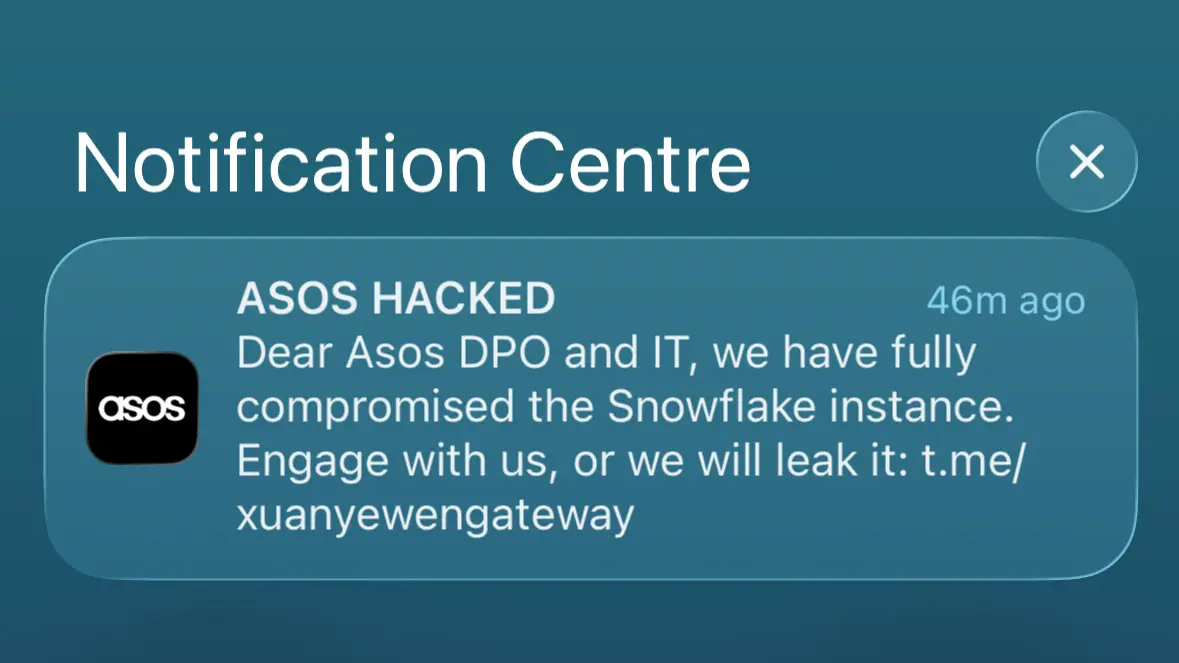
On 6 October 2026, around 10am UK time, ASOS app users got a push notification the company never sent. Hackers calling themselves Xuanye Group had gotten into a platform ASOS uses to message customers, and they used it to announce the ASOS data breach to shoppers directly. ASOS has since confirmed that customer data was stolen.
Your card details and password are not the main worry here. The bigger risk comes next: scam emails, texts and calls that use your real name and address to look believable. This guide covers what was taken, then how to spot the follow-up scams, which matters well beyond ASOS.
What the ASOS data breach exposed, and what it did not
ASOS's first statement said only that "basic personal information including name and contact details may have been accessed." It disclosed the incident in a filing with the London Stock Exchange, TechCrunch reported.
The picture got bigger on 7 October, when the hackers sent BBC News a sample of the stolen data. According to the BBC, as summarised by Malwarebytes, the sample contained:
- Names and home addresses
- Phone numbers and email addresses
- Customer numbers and dates of birth
- Searches made on the ASOS website
- The date each customer started shopping with ASOS
ASOS says payment card information and account passwords were not affected, and that its website and app are safe to use. The hackers have said the same about payment data on their Telegram channel, but that is a criminal's claim, so treat it as unverified.
Nobody has said how many people are affected. ASOS has about 17 million customers according to its website, and BleepingComputer said ASOS had not given a number when asked.
How a real app ended up sending a fake alert
No one broke into your phone. ASOS told BleepingComputer that an attacker posed as a trusted contact and tricked an employee into handing over login details. That is social engineering: fooling a person instead of hacking a system.
With those credentials, the attackers got into third-party platforms ASOS uses to store customer data and send messages. The group says it went in through Simon AI, a marketing tool built on Snowflake, a cloud data company. Snowflake says it has found no compromise of its own platform. How the attackers reached the push notification system has not been explained.
The alert itself was not aimed at shoppers. It was addressed to ASOS's data protection officer and IT team, saying the hackers had "fully compromised the Snowflake instance" and ending with "Engage with us, or we will leak it." Customers were simply the audience for an extortion demand. Malwarebytes reports the group gave ASOS two weeks to make contact and asked for a ransom to delete the data. ASOS has not said whether it will pay.
Phishing after a data breach is the real danger
Leaked names and addresses on their own cannot empty your bank account. What they do is make scams more convincing. A message that greets you by name and mentions your actual street feels real because the details are real.
There is a precedent for the same trick. Earlier in 2026, hackers broke into fintech company Betterment's marketing platform and used it to send customers a crypto scam that appeared to come from Betterment, TechCrunch noted. ASOS's alert was a threat, not a scam, but it exposed the same weakness: a message coming from an official app is not automatically genuine.
Red flags to watch for
- A refund or compensation offer for the breach that asks you to click a link or confirm card details.
- A "verify your account" message claiming your ASOS login needs checking because of the hack.
- Delivery problem texts naming ASOS and asking for a small fee.
- Calls from "ASOS security" asking for a one-time code. ASOS says it will never ask for passwords, security codes or payment details through an unsolicited message or call.
- Anything pointing you to Telegram or asking you to contact the hackers. Don't.
ASOS breach: what to do now
ASOS says there is "no action you need to take on your account." That holds for your password, but a few small habits still help:
- Don't tap links in unexpected ASOS messages. Open the app or type asos.com yourself to check orders or refunds.
- Ignore push alerts that look odd, even inside the official app. If they keep coming, Malwarebytes suggests removing the app until ASOS confirms the attackers are locked out.
- Treat calls with suspicion. Hang up and contact ASOS through its website if someone claims to be from the company.
- Change your password anyway if you reuse it elsewhere. ASOS says passwords were not taken, but reused passwords are a weak spot in any breach.
- Turn on two-step verification for your email, since that is where most reset links and scam messages end up.
- Watch your post and inbox for anything that uses your date of birth or address to sound official.
For a wider tidy-up of your accounts after a breach, our 60-Minute Privacy & Security Reset walks through it step by step.
What to watch next
ASOS says its investigation will continue over the coming weeks and that it will contact affected customers directly if they need to do anything. Watch for that email, and check it against the ASOS website before you trust it. Also keep an eye on the hackers' reported two-week deadline: if ASOS does not engage and the data gets published, expect a fresh wave of scam messages using it.
Sources
- Asos confirms breach of customer data after hackers send rogue app notification (TechCrunch)
- ASOS links data breach to social engineering attack, credential theft (BleepingComputer)
- ASOS hackers send push notifications to customers (Malwarebytes)
- ASOS breach update: Hackers stole customer details and shopping searches (Malwarebytes)
- ASOS confirms data breach after "hacked" app alert reaches shoppers (Help Net Security)
Found this useful? Send it to someone who should read it.