PHP2Shell: What the AI-Found PHP Flaw Means and How to Check Your Site
Two critical PHP bugs called PHP2Shell are under attack. Updating WordPress won't fix them. Here's how to check your PHP version, what to ask your host, and what visitors should do.
इस पोस्ट में9 sections
- What PHP2Shell actually is
- AI helped find it, and attackers are already using it
- The fixed PHP versions
- How to check your PHP version in WordPress
- The message to send your hosting company
- On PHP 8.1 or older, you need to move up
- After the fix, check you weren't already hit
- Just a visitor? Here's what to do
- What to watch next
On 21 October 2026, PHP released emergency updates for PHP2Shell, a pair of critical bugs that let attackers run their own code on a web server without logging in. PHP is the language behind WordPress, Drupal, Joomla and a huge share of the web; Wiz says it powers about 70% of all websites. If you run a site, even a small blog or a shop on cheap hosting, this one needs your attention today.
The catch: clicking "Update" in WordPress will not fix it. The bug lives in PHP itself, on the server, so the fix has to happen there.
What PHP2Shell actually is
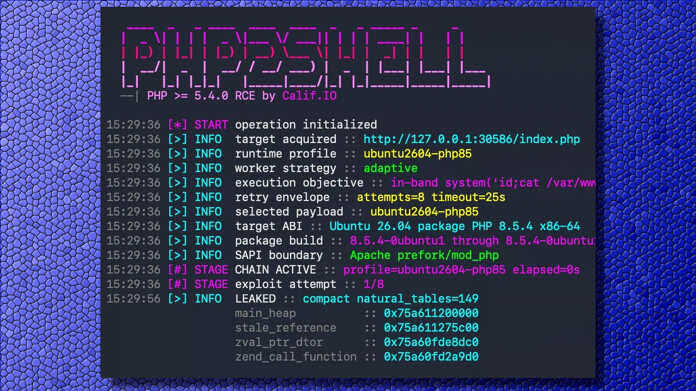
PHP2Shell is the nickname for two vulnerabilities, CVE-2026-109618 and CVE-2026-109619. PHP rates both 9.2 out of 10 on the CVSS severity scale. In plain terms, a stranger can send a specially crafted request to a website and end up controlling the server behind it. Researchers also showed they could read chunks of the server's memory, which can contain passwords, login tokens and API keys.
The bugs are old. Wiz says every PHP version released in the last decade is affected by at least one of them, and Calif traced the earliest affected code back to PHP 5.4, according to Tenable. The official PHP advisory says all PHP installations serving web requests are at risk, including common setups like PHP-FPM, Apache with mod_php and LiteSpeed.
AI helped find it, and attackers are already using it
Security firm Calif found the first bug on 1 August 2026 and reported it to PHP on 11 August, working with OpenAI's Patch the Planet programme, as GIGAZINE reported. Wiz found it independently on 19 August, using AI models including Google's Gemini 4 Argon and OpenAI's GPT-5.6 Sol alongside its own tools. PHP's team then spent weeks preparing a fix.
Details leaked before the planned 22 October release, so PHP moved the patch up a day. Amazon's threat team saw the first exploit attempt on its decoy servers on 17 October, four days before the fix existed, according to Tenable. Cloudflare and watchTowr have since reported attack attempts. India's cyber agency CERT-In issued a critical advisory, CIVN-2026-0510, saying multiple reports confirm "large scale exploitation in the wild".
The fixed PHP versions
You are safe from PHP2Shell only if your server runs one of these versions or newer:
- PHP 8.5.12
- PHP 8.4.27
- PHP 8.3.36
- PHP 8.2.35
Anything below those on the same branch, such as 8.4.26 or 8.3.35, is vulnerable. One wrinkle: some Linux distributions patch PHP without changing the headline version number, so the only sure answer comes from your host.
How to check your PHP version in WordPress
You don't need any technical skills for this. It takes about a minute.
- Log in to your WordPress dashboard.
- Go to Tools, then Site Health.
- Click the Info tab at the top.
- Open the Server section and look at the line that says PHP version.
- Note the number and compare it with the list above.
Not on WordPress? Most hosting control panels show the PHP version too. In cPanel, look for MultiPHP Manager. If you have several sites, check every one; they can run different versions.
The message to send your hosting company
On shared or managed hosting, you usually can't update PHP yourself. Your host has to do it. Many will already be on it, but don't assume. Copy this into a support ticket or chat:
The restart point matters. Security firms note that installing the update does nothing until PHP is restarted and the new version is actually running.
On PHP 8.1 or older, you need to move up
PHP 8.1, 8.0, 7.4 and older get no official fixed release. The PHP team did publish rough source code patches for 7.4, 8.0 and 8.1, but those are for people who build PHP themselves, not for ordinary site owners. Some Linux vendors with long-term support plans also offer fixes, so ask your host.
The realistic answer for most people is to switch to PHP 8.3 or newer. Most hosts let you change this in the control panel. Old plugins and themes can break on a newer PHP, so take a full backup first, and if your host offers a staging copy, try it there. Skip 8.2 if you can: PHP says it reaches end of life on 31 December 2026.
If you manage your own server and truly can't update today, PHP lists stopgaps such as turning off session upload progress and using a firewall like Cloudflare's emergency rules. PHP is clear that these reduce risk but do not make a server safe.
After the fix, check you weren't already hit
Since attacks started before the patch, a quick check is sensible once your host confirms the update. Hosting provider xCloud suggests looking for:
- Administrator accounts in WordPress you don't recognise
- PHP files sitting inside the wp-content/uploads folder, which should only hold images and media
- Core or plugin files that fail a security plugin's integrity check
If you find anything odd, ask your host for help restoring from a clean backup, then change all admin, database and hosting passwords.
Just a visitor? Here's what to do
Big platforms move fast on bugs like this. Smaller sites, like a local shop, a club forum or a college portal, often run old PHP on cheap hosting and may not patch for weeks. Because PHP2Shell can leak server memory, passwords on those sites could be exposed.
If you reused a password on small websites, change it on your important accounts (email, banking, UPI apps) so they all have different passwords. A password manager makes this painless. Turn on two-step verification wherever it's offered.
What to watch next
Expect more attacks over the coming weeks as automated tools scan the web for unpatched servers; Tenable cites estimates of over 1.3 million exposed hosts. Check your PHP version today, send that message to your host, and if you're on PHP 8.1 or older, put the upgrade on this week's to-do list rather than next month's.
स्रोत
काम का लगा? इसे उस व्यक्ति को भेजें जिसे यह पढ़ना चाहिए।